Treasures of Humanities - The pinnacle of craftsmanship in ancient Shu
Over ten thousand precious cultural relics have been unearthed in Jinsha, among which the following are the most dazzling treasures of the museum. They embody the extraordinary religious beliefs, artistic achievements, and craftsmanship of the ancient Shu ancestors.
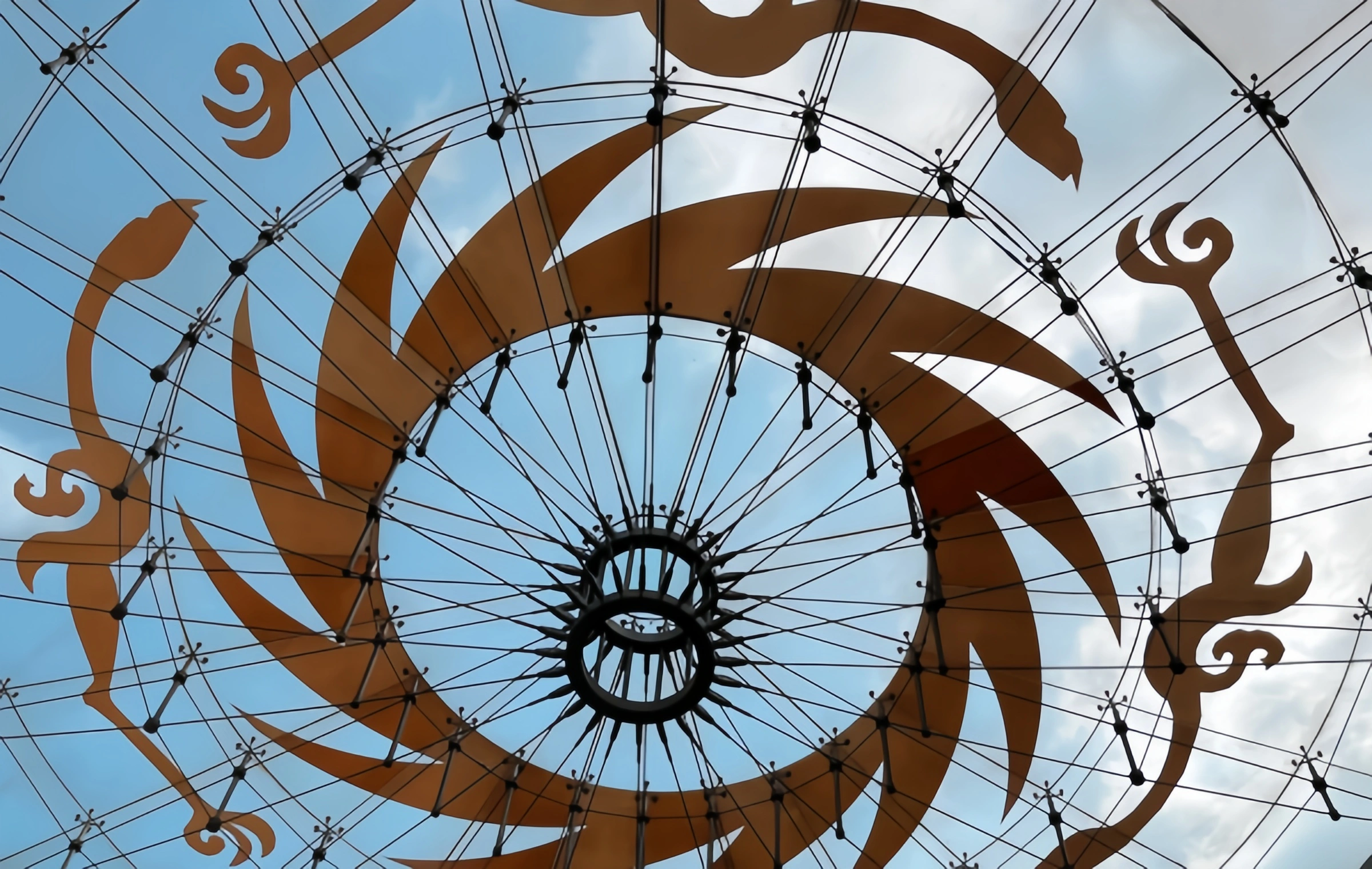
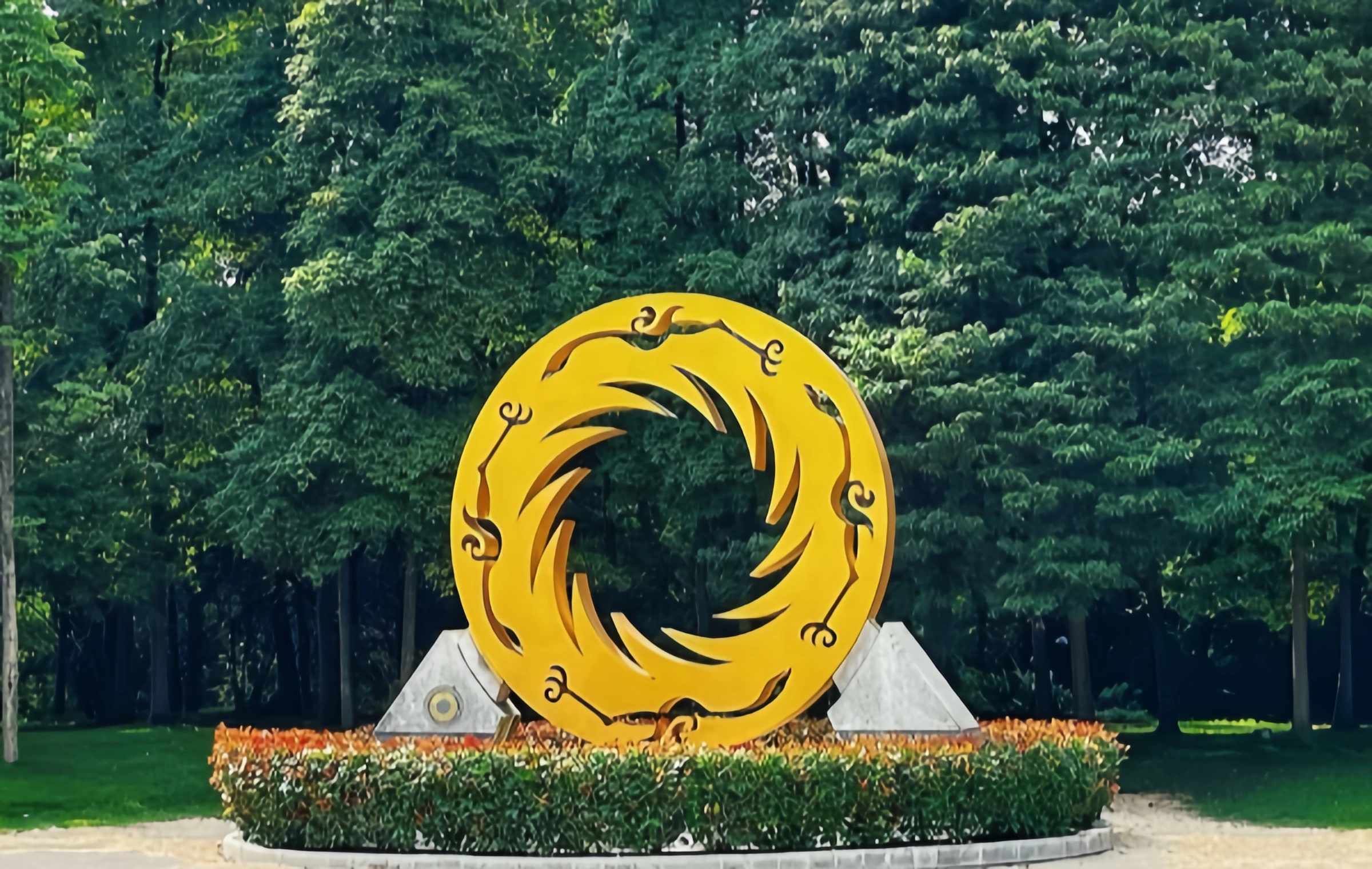
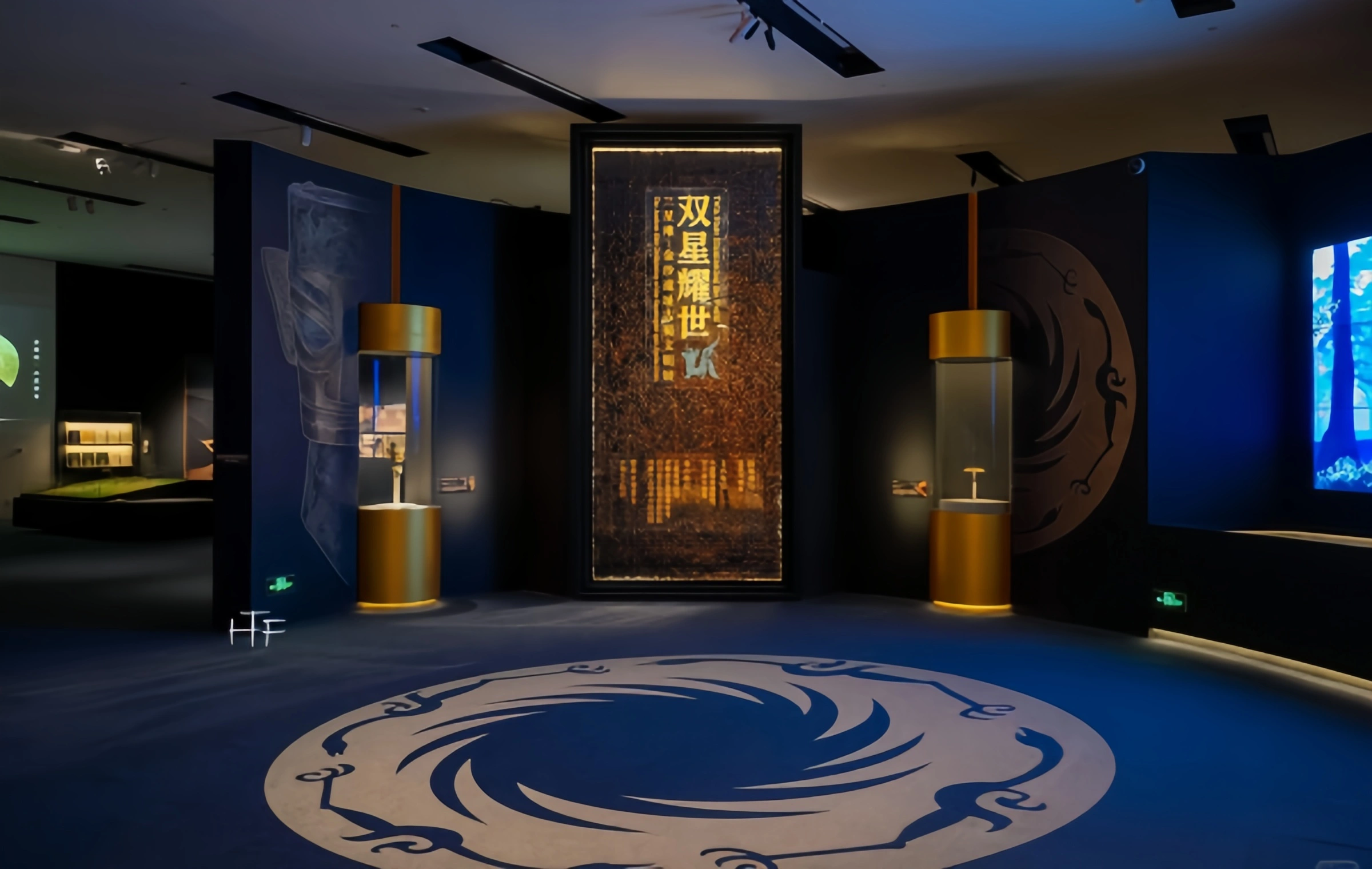
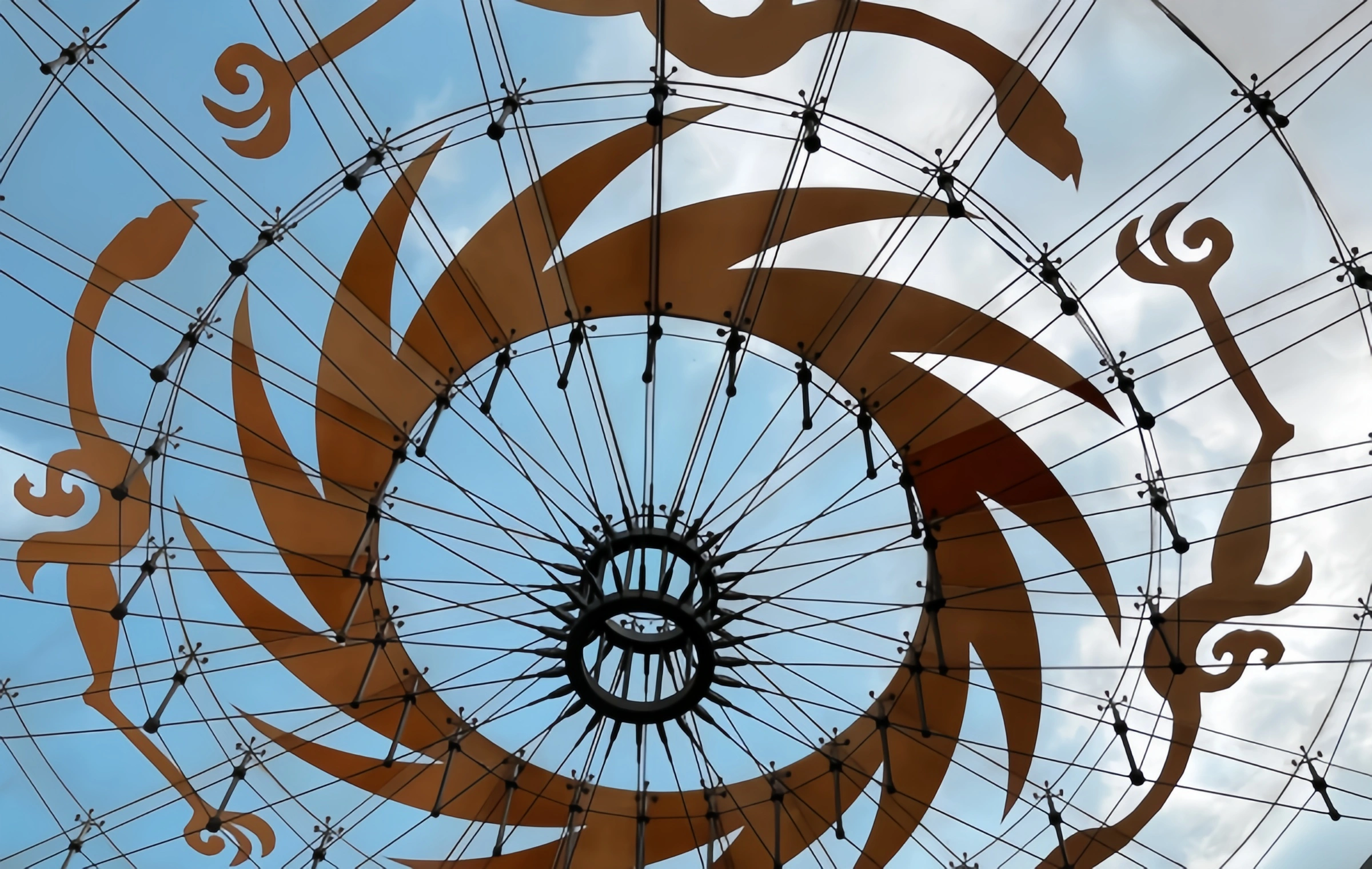
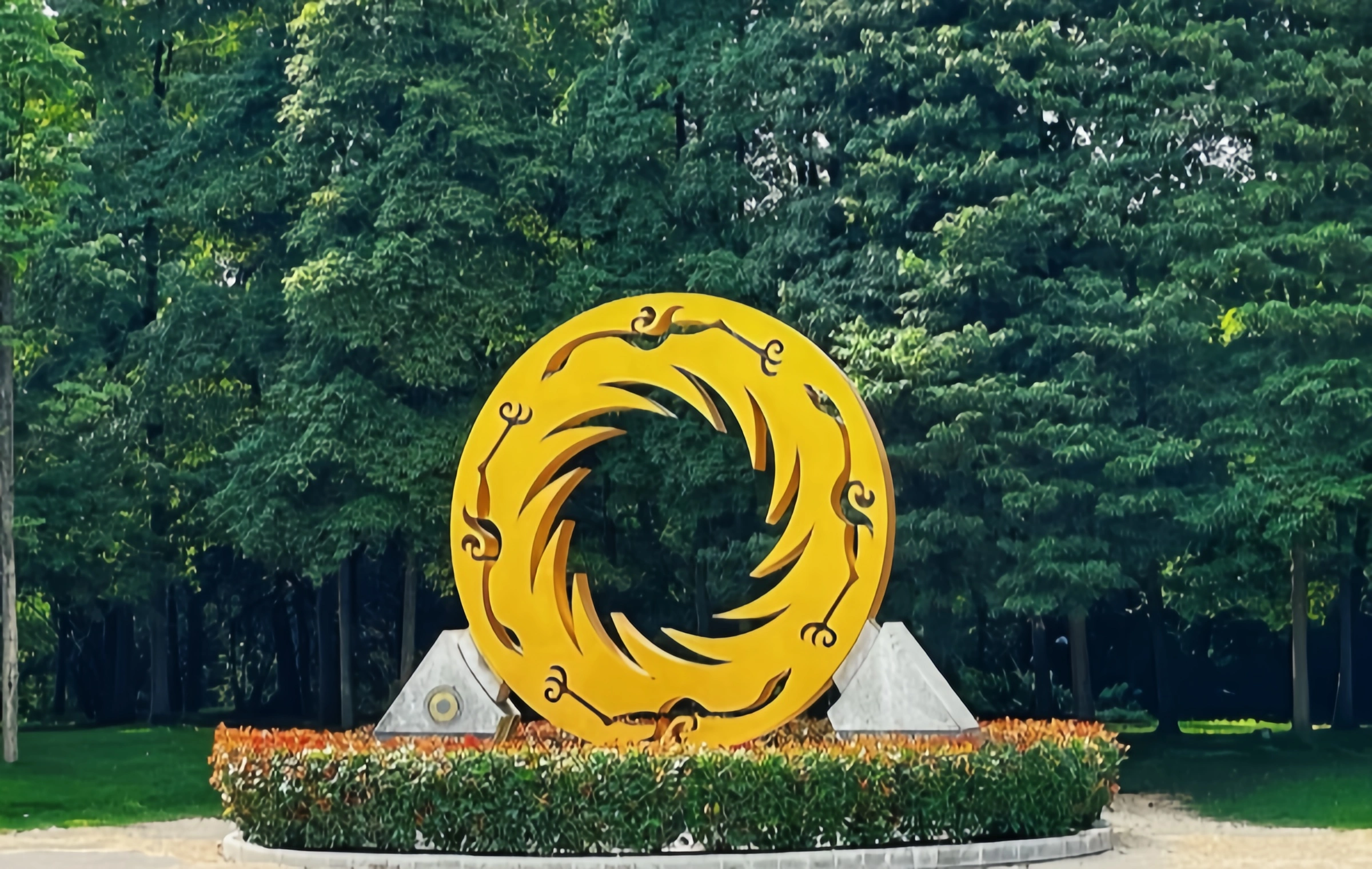
The golden decoration of the Sun God Bird is undoubtedly the "crown of the town hall" and a symbol of Chinese cultural heritage. This circular gold foil, with a thickness of only 0.02 centimeters and a gold content of up to 94.2%, uses skilled hollowing techniques. The inner layer is composed of twelve clockwise rotating rays of the sun, and the outer layer consists of four counterclockwise flying mythical birds. It succinctly interprets the ancient Shu people's worship of the sun, golden crow (divine bird), and the cycle of the four seasons, and is a perfect crystallization of ancient Shu's golden craftsmanship and philosophical concepts. The most important reason for coming to Jinsha is to witness the original object, which is as thin as cicada wings and shimmering with its own eyes.
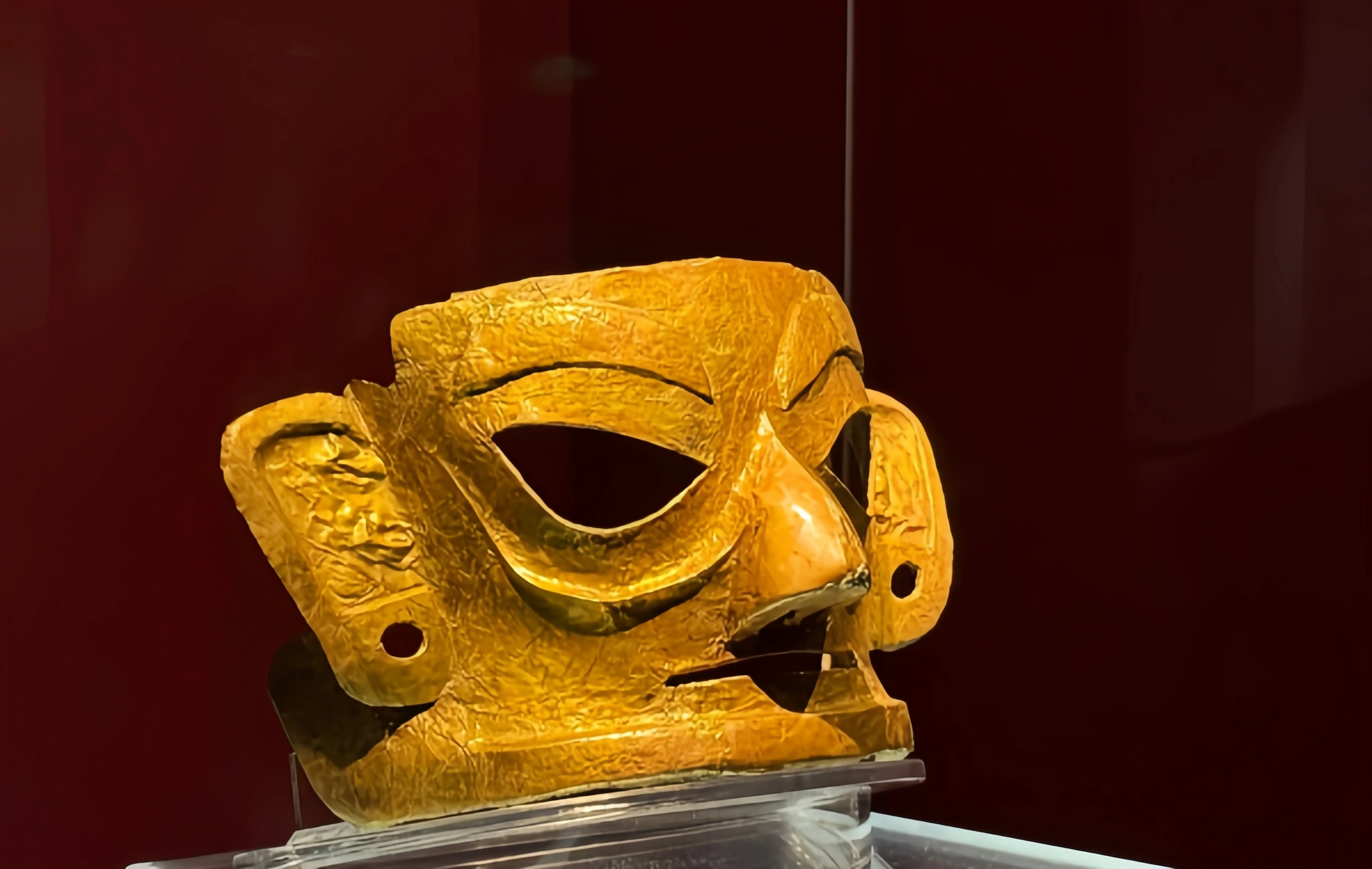
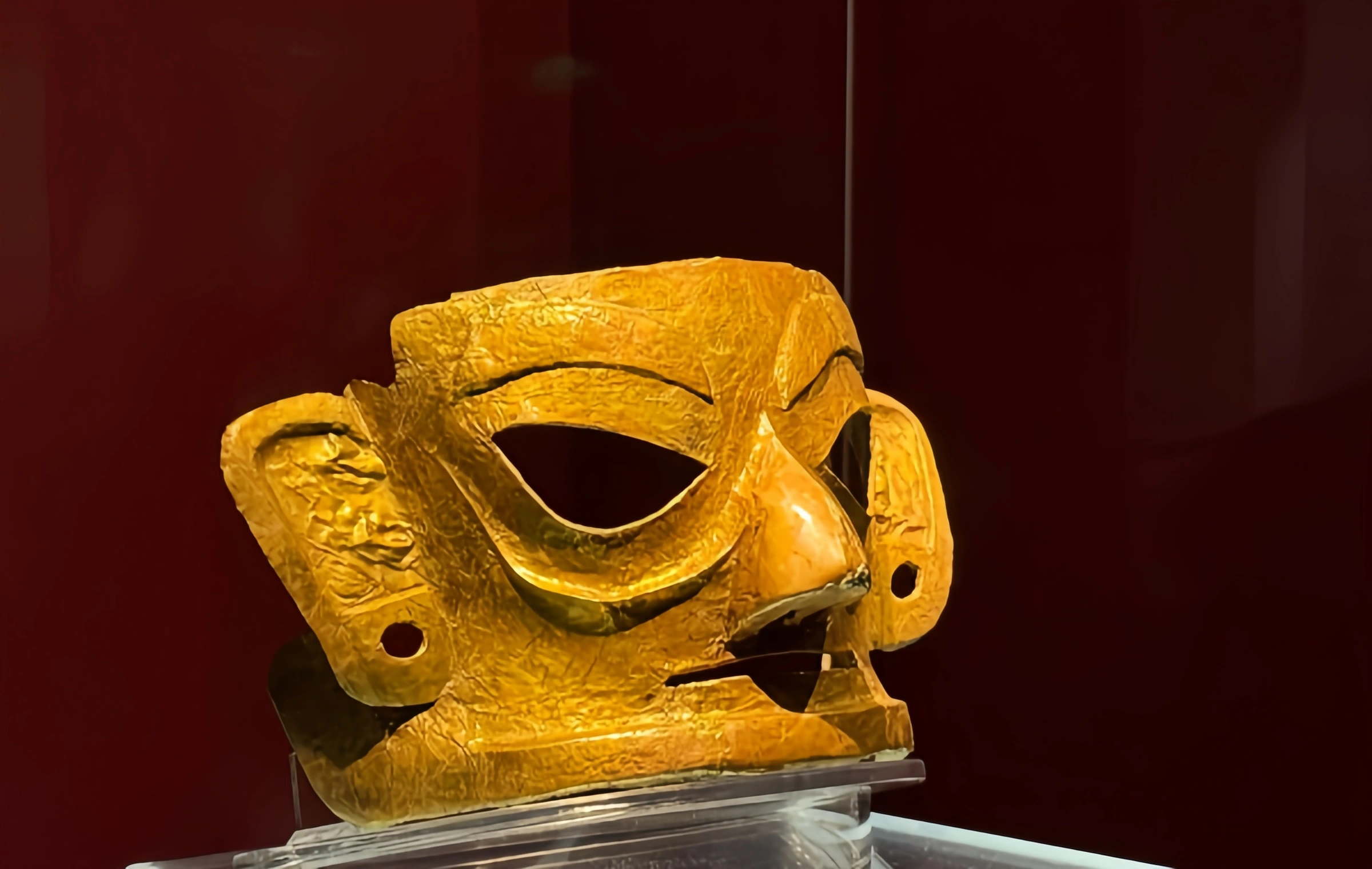
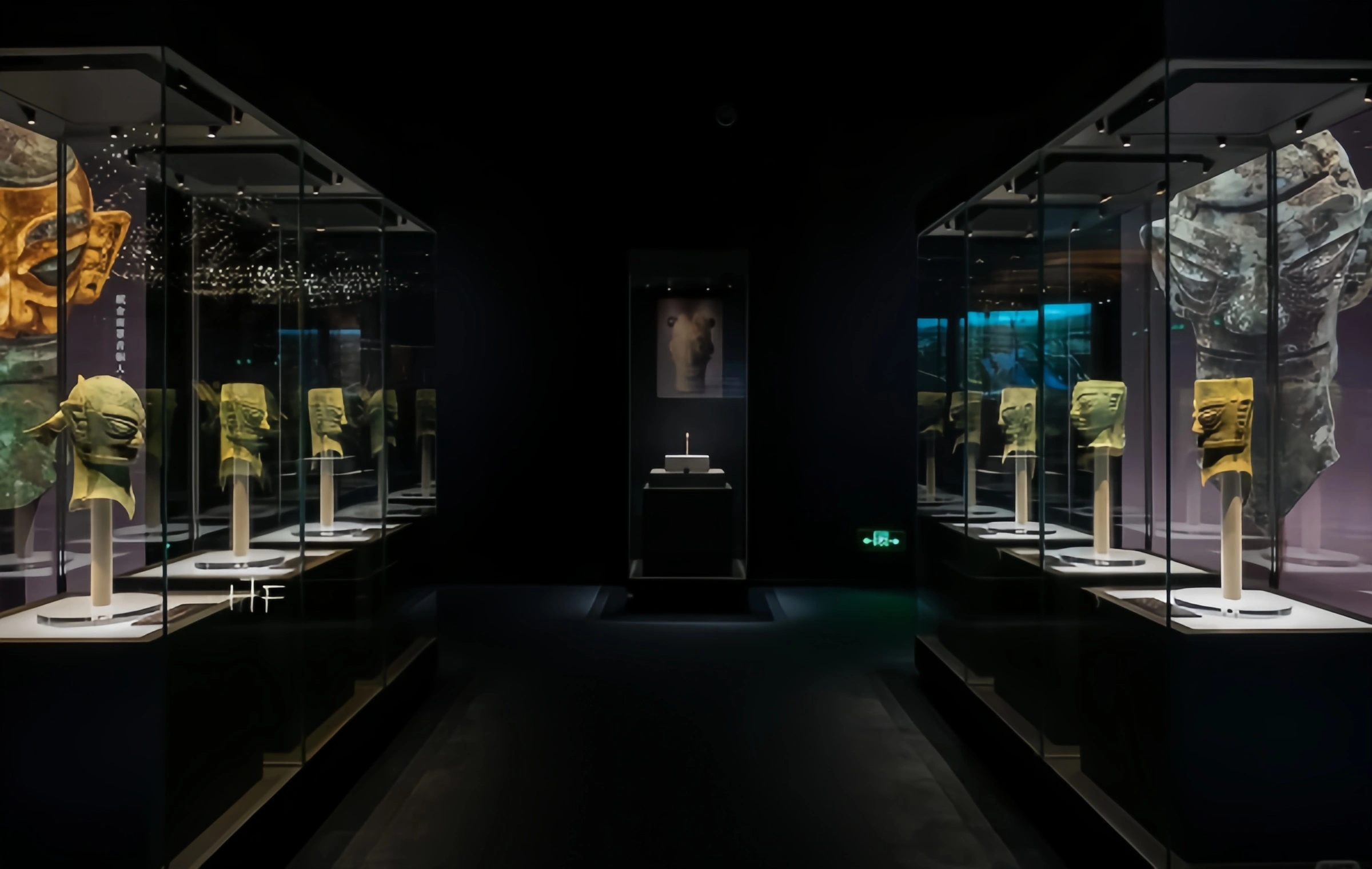
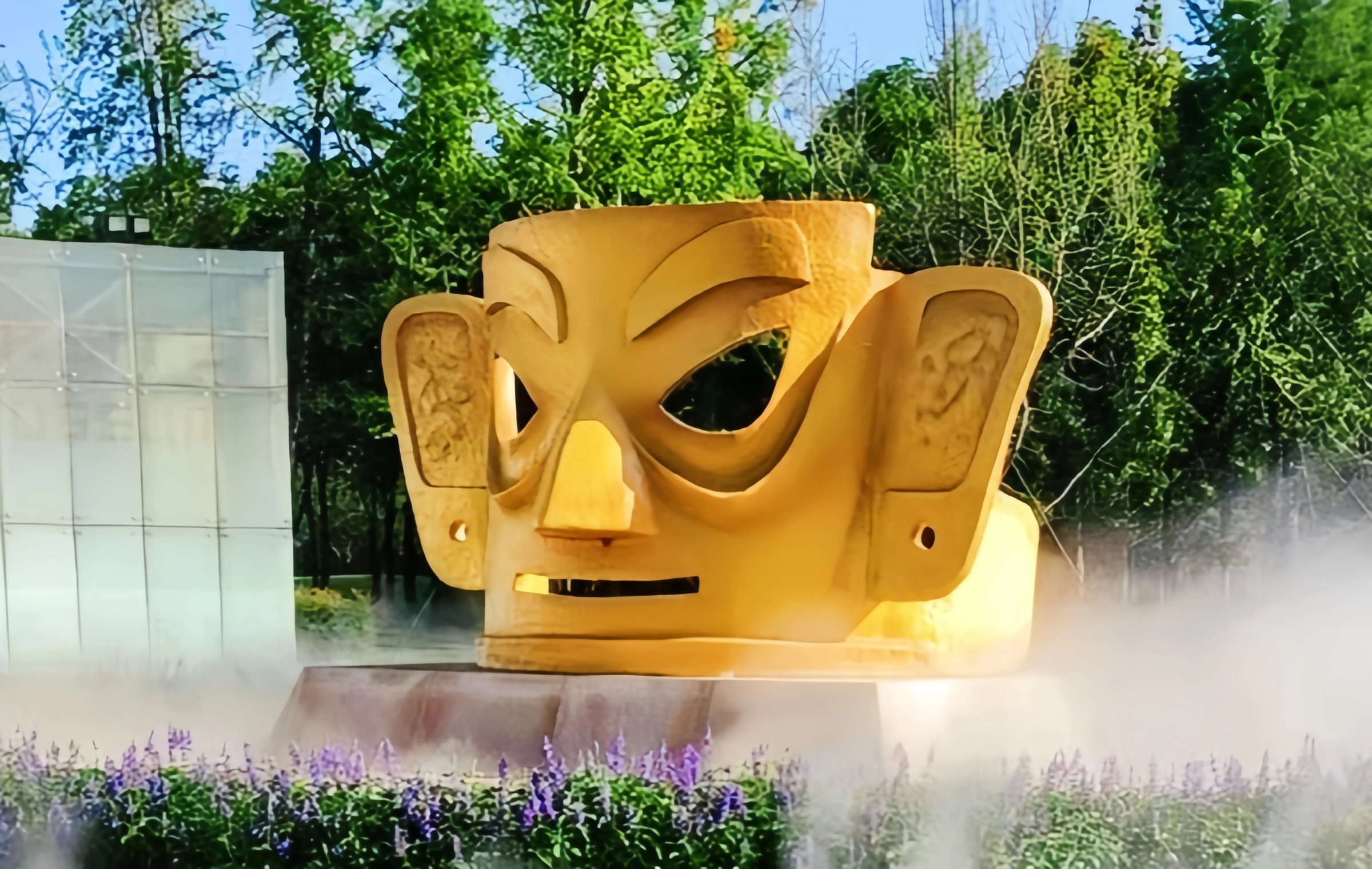
Golden Mask: Unlike the bronze masks from Sanxingdui, the golden mask unearthed from Jinsha is small and realistic, and it may be attached to the face of wooden or bronze figures. The mask has clear eyebrows and eyes, and a solemn expression. It is one of the most complete and exquisite golden masks discovered in China during the same period, showcasing the solemnity and luxury of the upper class sacrificial activities in ancient Shu society.
Ten section jade cong and Liangzhu culture jade cong: Jinsha unearthed the largest number of jade congs from the Shang and Zhou dynasties in China, including a 22 centimeter high ten section green jade cong engraved with 40 mysterious human face patterns, with exquisite craftsmanship. Even more astonishing is that the museum also houses a typical jade cong from the Liangzhu culture in the lower reaches of the Yangtze River (about 5000 years ago). How this jade cong, which spans thousands of years and travels thousands of miles, appeared in Jinsha is still an unsolved mystery. It silently tells the profound and mysterious exchanges between early civilizations on the Chinese land.
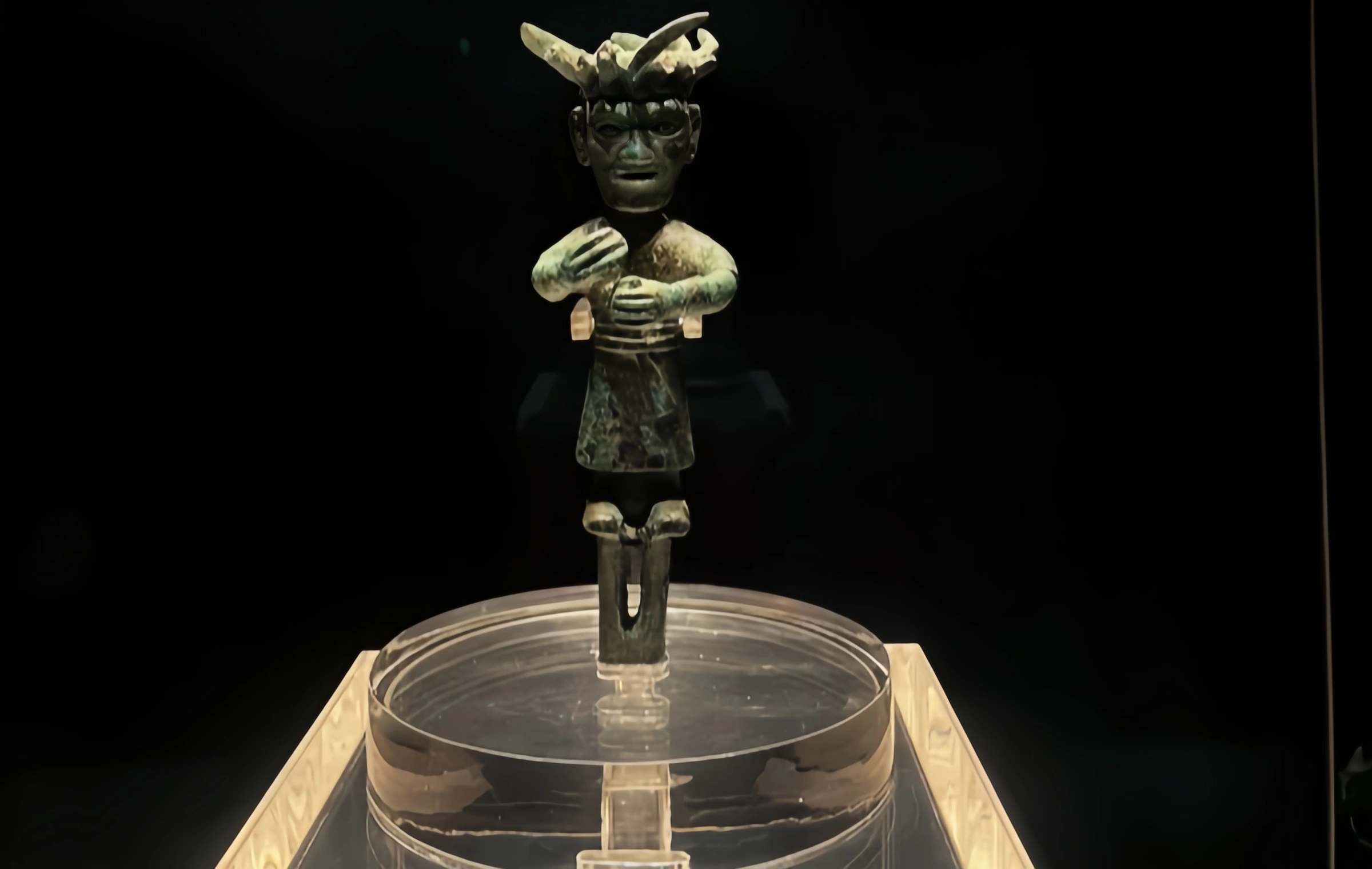
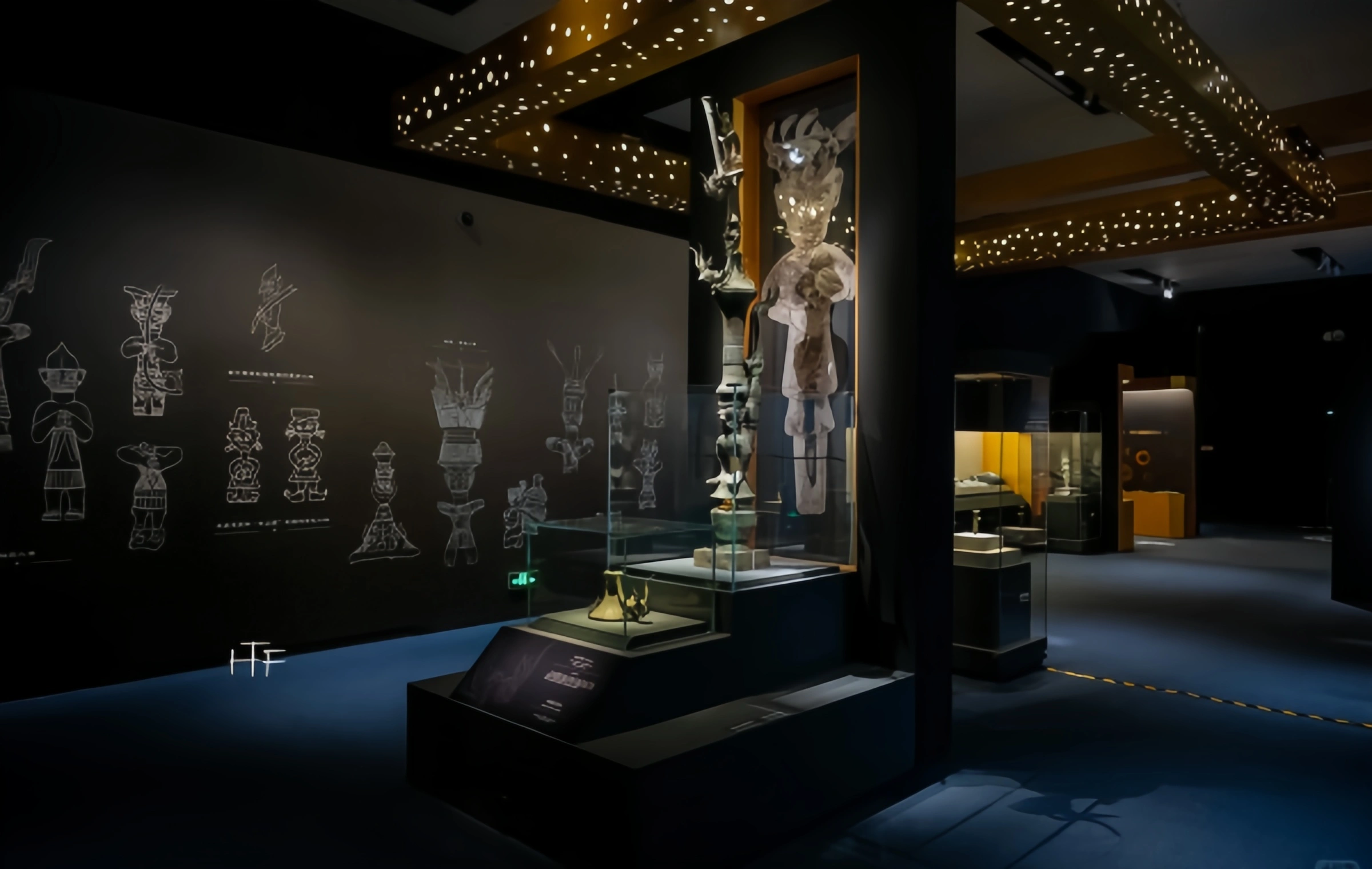
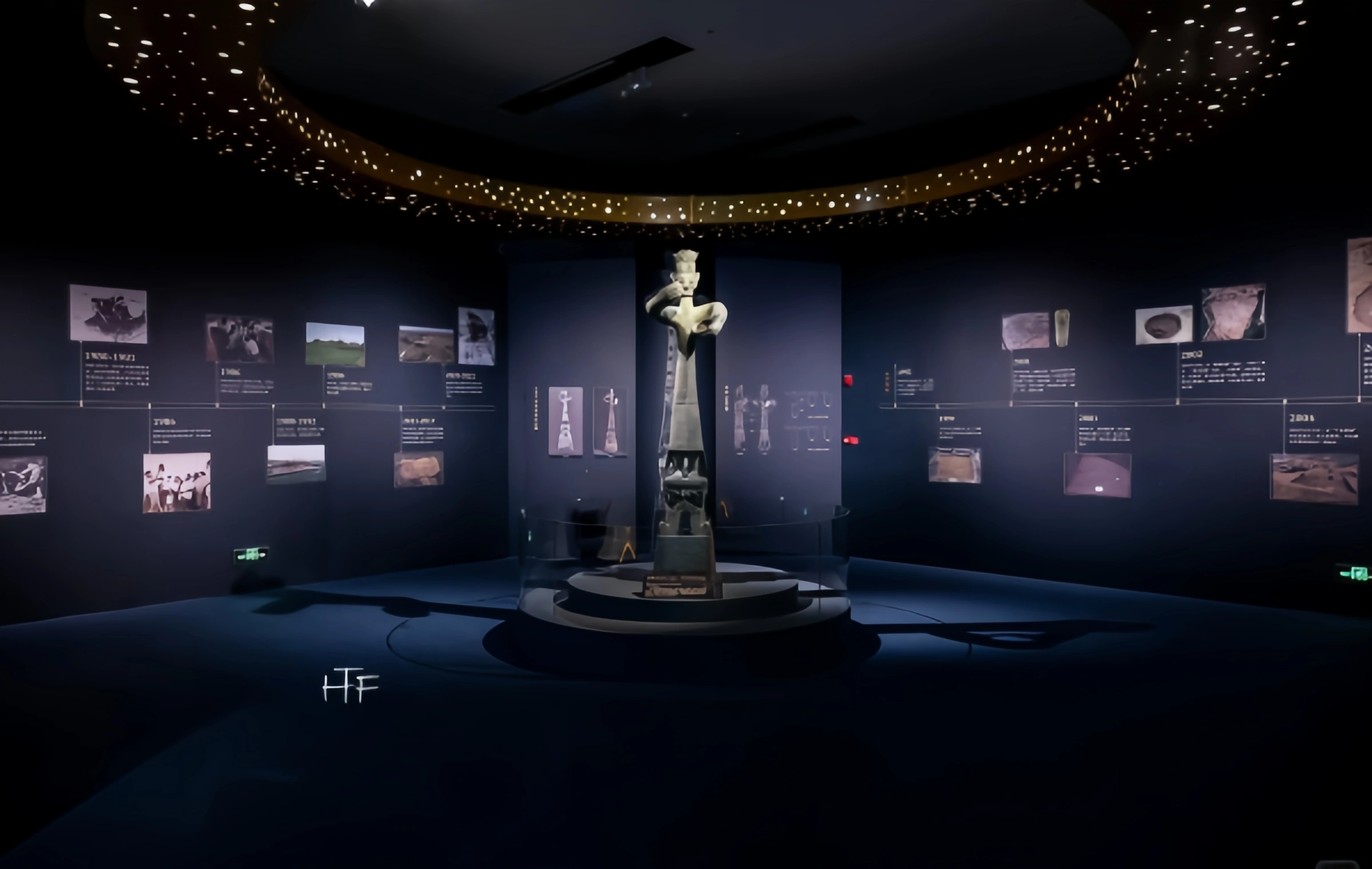
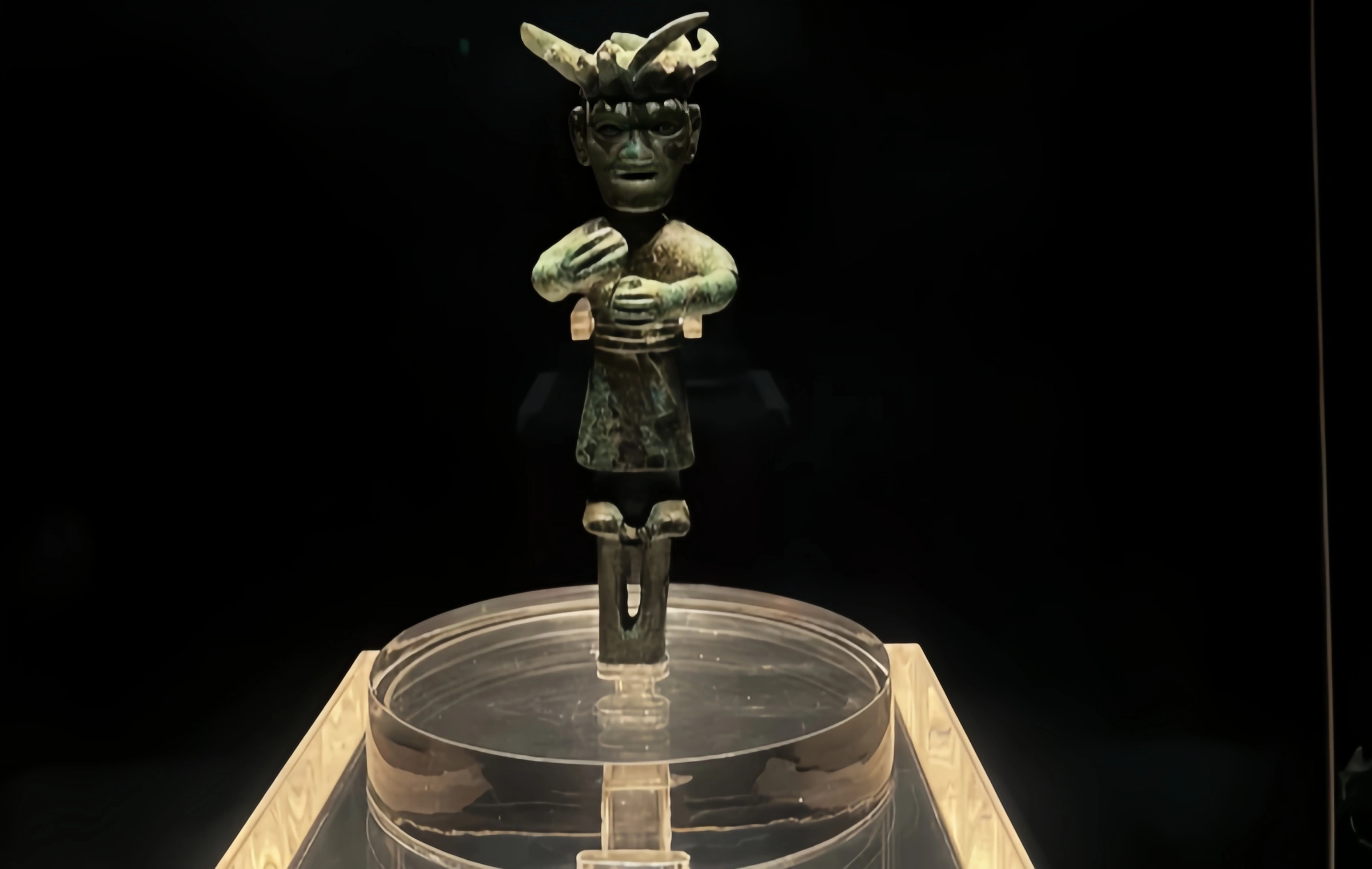
Bronze standing figure and stone tiger: The small bronze standing figure wears a high crown on its head and holds hands in a gripping shape. Its shape is inherited from the Sanxingdui standing figure and may be the image of a wizard or king. And dozens of kneeling stone tigers are carved vividly, majestic and fierce. They are important ritual vessels used by ancient Shu people for worship, reflecting their worship of tigers.
Secret Sites - Archaeological Sites Traversing Three Thousand Years
The charm of museums lies not only in the treasures displayed in their windows, but also in the archaeological sites preserved in situ and available for visitors to visit.
Ruins Museum - Former Site of Large Sacrificial Venues: This is the core soul of the museum. Underneath the massive steel dome, lies the original appearance of an archaeological excavation site spanning over 10000 square meters. Tourists can follow the suspended wooden boardwalk and overlook up close the sacrificial pits that still preserve ivory, wild boar tusks, antlers, beautiful stones, and other offerings, experiencing the mystery and solemnity of the grand sacrificial activities held here three thousand years ago. The sunlight shines through the ceiling, and time seems to freeze here.
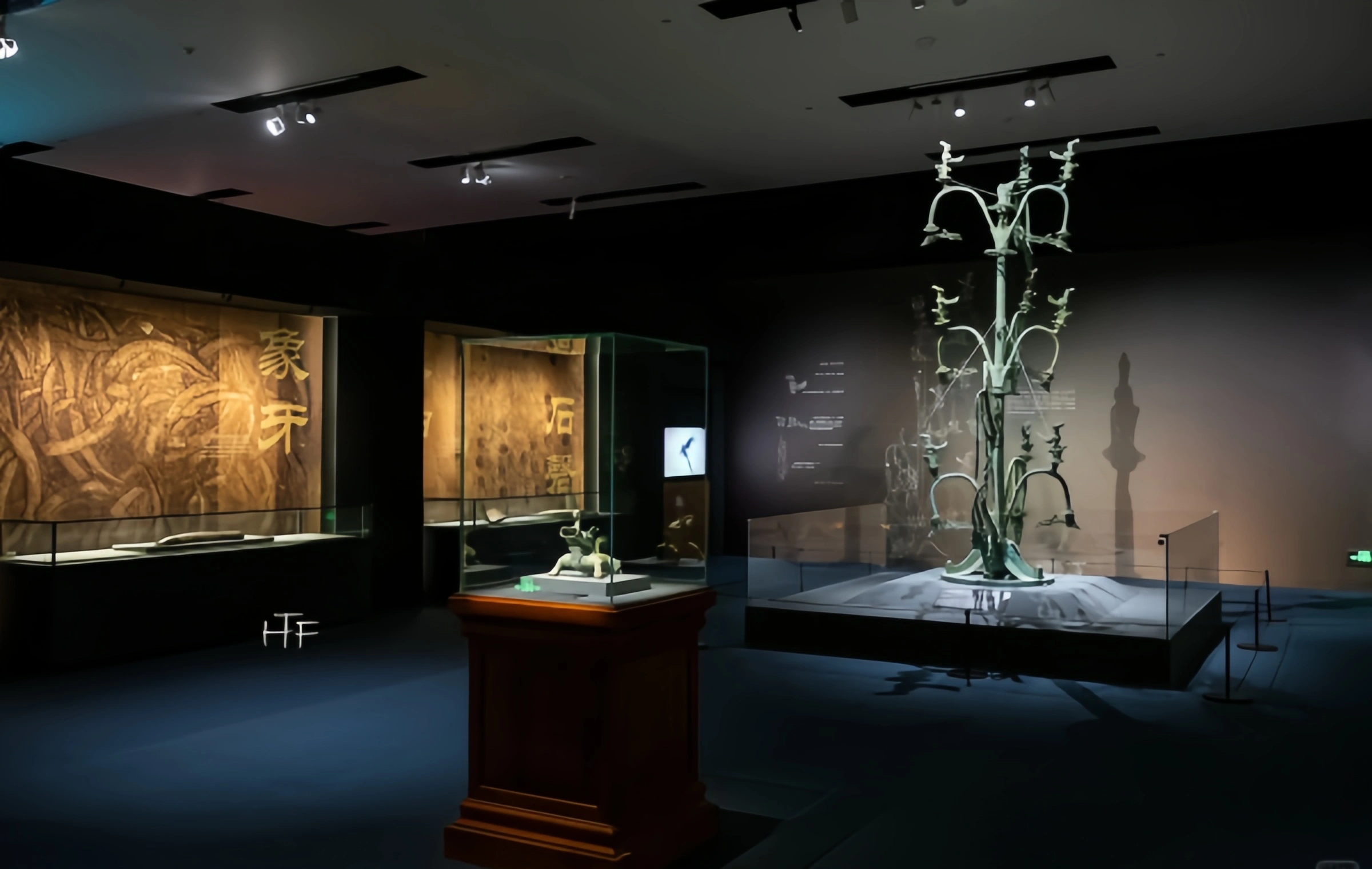
Exhibition Hall - Modern Interpretation of Civilization Narrative: Unlike the primitive shock of the ruins hall, the exhibition hall systematically combs through the natural environment, social life, religious worship, and technological achievements of the ancient Shu Jinsha through five exhibition halls: "Ancient Homeland", "Silhouette of the Royal Capital", "Endless Heaven and Earth", "Thousand year Heritage", and "Interpretation of Jinsha", using modern exhibition technology, restoring the fragmented archaeological discoveries into a vivid and perceptible civilization story.
Ebony Forest and Jade Road: The "Ebony Forest" in the park is composed of dozens of immortal giant ebony trees that have lasted for thousands of years. They are a witness to the dense forests of the Chengdu Plain during the ancient Shu period. The 'Road of Jade and Stone' is paved with various natural stones, symbolizing the ancient Shu ancestors' way of obtaining jade materials and communicating with the outside world, cleverly integrating natural landscapes with cultural imagery.
Photography tips:
Cultural Relic Light and Shadow: In the "Thousand Year Heritage Treasures" exhibition hall of the exhibition hall, use the side light of the display cabinet to capture the hollow details and golden luster of the golden decoration of the Sun God Bird (please do not use flash).
Depth of the ruins: On the viewing platform of the ruins museum, use a wide-angle lens to take a panoramic view of the entire sacrificial area, capturing the enormous scale and historical depth of the ruins.
Architecture and Nature: In the museum park, capture the modern ruins of the museum building framed with the ancient ebony forest, creating a dialogue that transcends time and space.