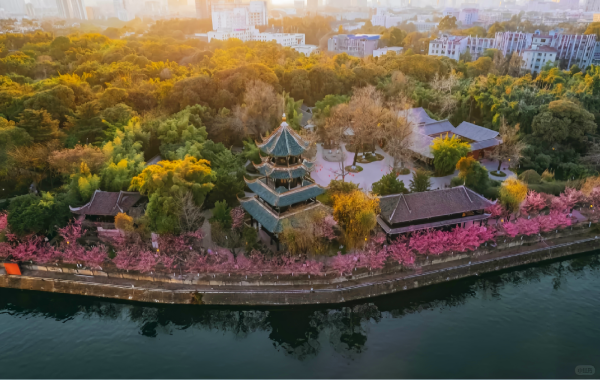
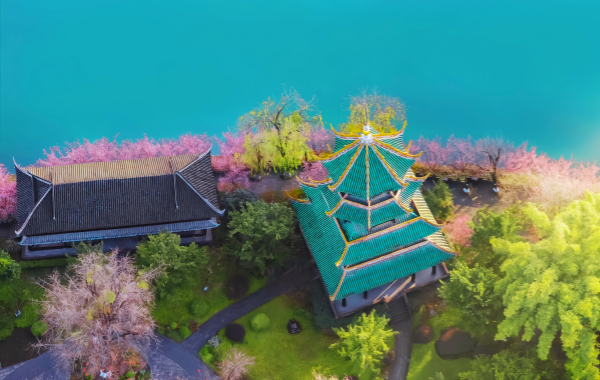
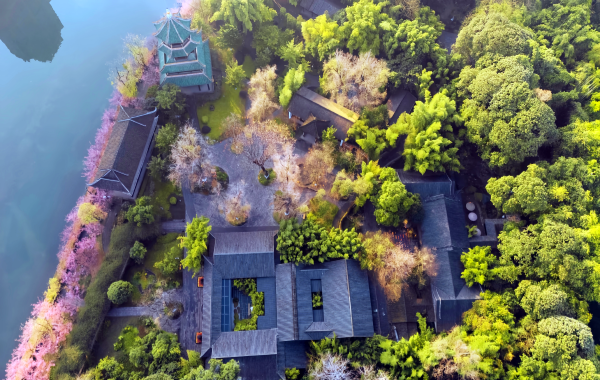
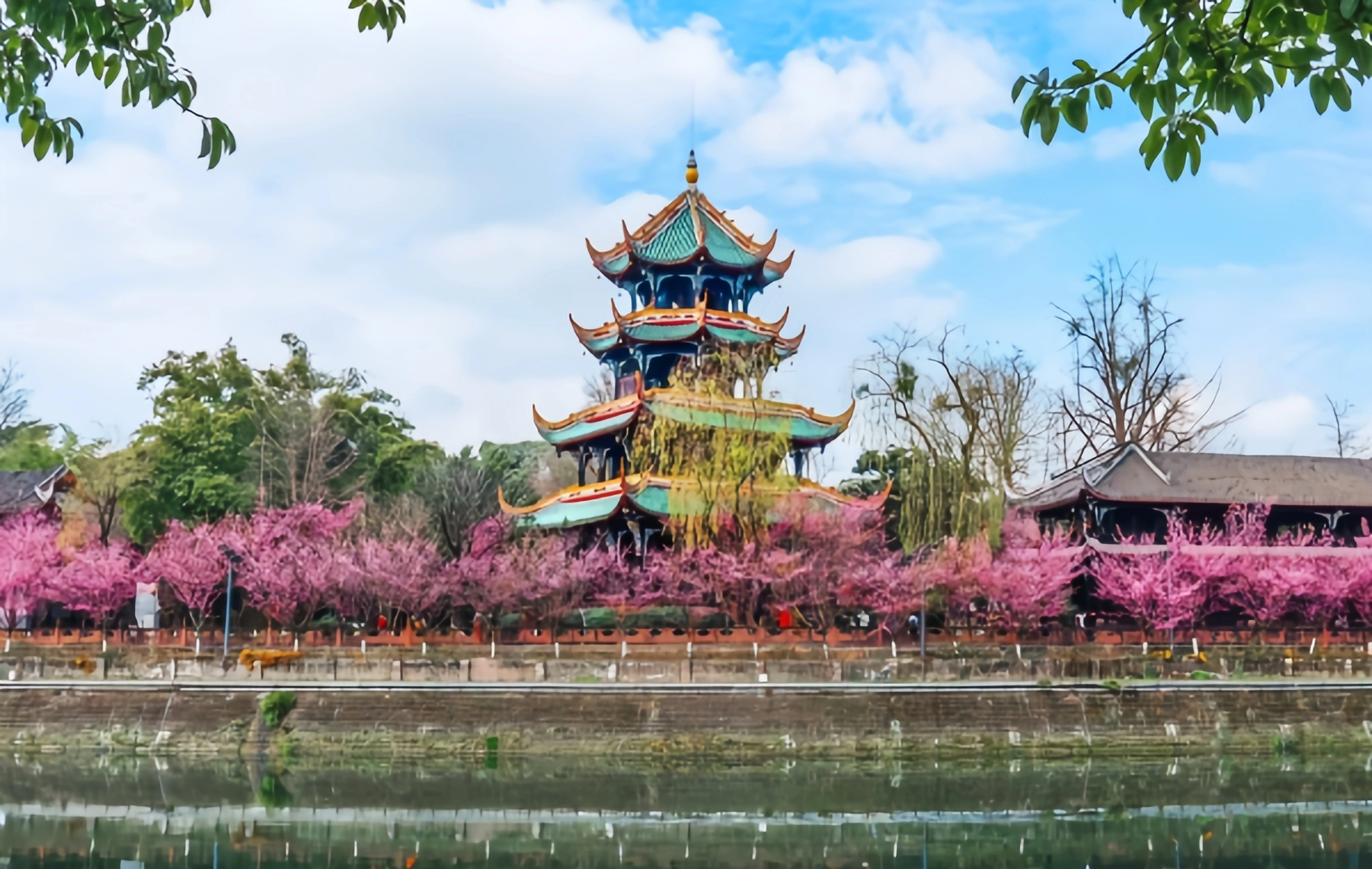
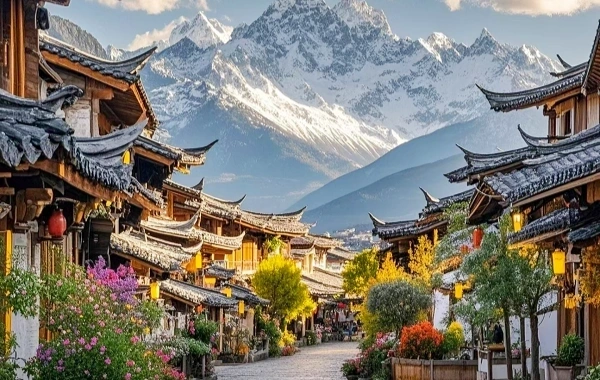
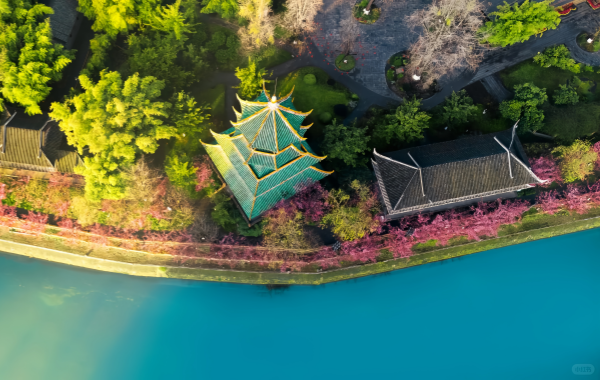
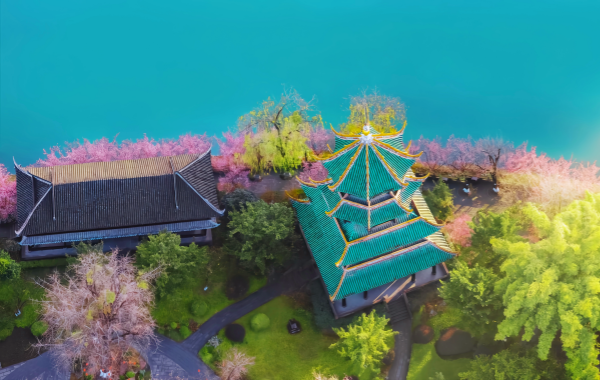
The charm of Wangjiang Tower lies in its perfect integration of the beauty and delicacy of classical architecture with the tranquility and elegance of bamboo plants, creating an independent world carrying poetic and picturesque charm in the bustling city.
Natural Creation - The Kingdom of Bamboo and the Rhythm of the River
The "natural" landscape of the park is created with carefully cultivated bamboo forests as the core, creating an urban forest atmosphere.
Bamboo Sea Green Waves: A Living Museum that Breathes
This is a true 'Bamboo Expo', gathering over 200 species of bamboo from western China and Southeast Asia. From the towering bamboo shoots of Nanzhu and Cizhu, to the low and clustered bamboo shoots of Fengwei and Qinsi, to the uniquely shaped bamboo shoots of Renmian and Buddha Belly, a three-dimensional ecological painting with rich layers and evergreen seasons is formed. Strolling along the winding bamboo path, the sunlight shines through the bamboo leaves, casting mottled light and shadow. As the wind blows, the sound of bamboo waves echoes, making it a rare "forest bath" in the city. It is also an excellent classroom for learning plant knowledge and experiencing Eastern bamboo culture.
Jinjiang Sail Shadow: Flowing Millennium Poetry and Painting
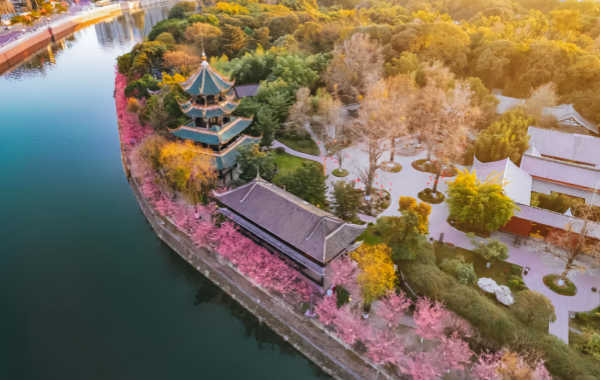
Ascending the Wangjiang Tower, leaning against the railing and gazing into the distance, the Jinjiang River (Fuhe River) winds eastward like a jade belt from below. This mother river, which has nourished Chengdu for thousands of years, once witnessed the prosperity of the "Menbo Dongwu Wanli Ship". Today, it is still rippling with blue waves, occasionally dotted with boats and white egrets. The skyline of the city across the river and the upturned eaves of ancient buildings form a vivid picture of a harmonious dialogue between tradition and modernity.
Humanistic Craftsmanship - Poetry Tower Ancient Architecture and Cultural Heritage
Every pavilion and tower here is engraved with historical memories and carries the weight of culture.
Wangjiang Tower (Chongli Pavilion): Flying Pavilion and Flowing Pills by the Jinjiang River
As the soul landmark of the park, this all wooden attic is itself an artistic treasure. Its architectural style blends the characteristics of the north and south. The base of the pavilion is made of rock, with a four story body. The upper two floors are octagonal, and the lower two floors are square, symbolizing "the sky is round and the earth is square". Layer by layer, the eaves are covered with green glazed tiles, the golden roof shines brightly, and the painted red pillars are extremely magnificent. There are ancient and modern couplets hanging inside the building, and the most famous one is undoubtedly "Wangjiang Tower, Wangjiang Stream, Wangjiang Tower, Wangjiang Stream, Jianglou for eternity, Jiangliu for eternity", showcasing its dual artistic conception of geography and culture.
Xue Tao Memorial Hall and Xue Tao Well: The Storage of Talented Women's Fragrant Souls
The memorial hall displays Xue Tao's life, poetry, and his position in literary history. The Xue Tao Well next to it is said to be where Xue Tao drew water and made paper. Since the Ming Dynasty, this well water has been used to make the elegant "Xue Tao Jian", adding to the legendary color of the story. This is the core of pursuing the poetic charm of the Tang Dynasty and experiencing the spiritual world of ancient talented women.
Ancient Architecture Complex: An Elegant Collection of Western Sichuan Gardens
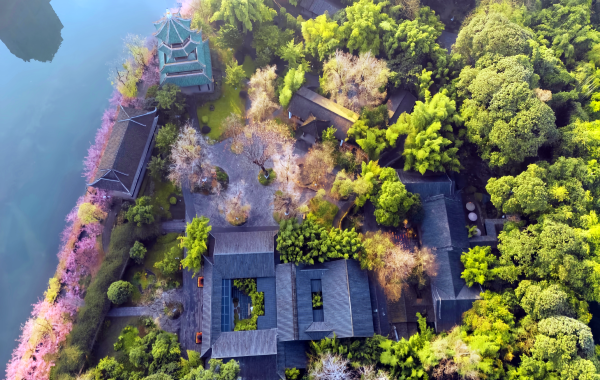
There are also a series of Qing Dynasty buildings in the park, such as Zhuojin Tower, Yinshi Tower, Huanjian Pavilion, and Wuyun Immortal Hall. They are scattered haphazardly along the banks of the Bamboo Grove River, resembling boats or painted boats, with different functions. Together with the Wangjiang Tower, they form a complete ancient architectural complex, reflecting the exquisite and subtle beauty of Western Sichuan gardens.
Photography tips:
The best panoramic camera position is on the other side of the Jinjiang River or outside the park at Jiuyan Bridge, which can capture the complete reflection and river view of Wangjiang Tower.
The best architectural location is at the foot of Wangjiang Tower, looking up at its layered eaves and sky.
The best bamboo scenic spot is located on the bamboo path deep in the park, utilizing the depth of the bamboo forest to capture a serene scene of intertwined light and shadow.
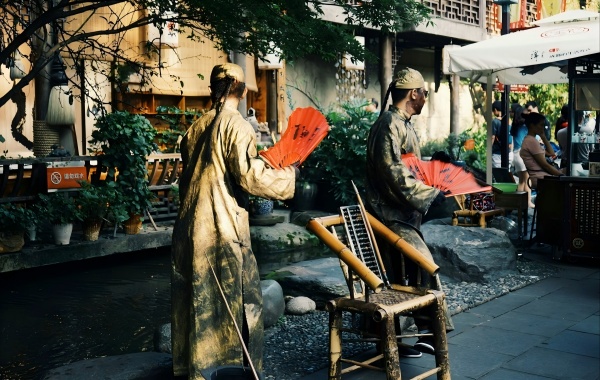
The best humanistic location is in the tea garden, capturing the leisurely life scenes of Chengdu citizens drinking tea, reading newspapers, and setting up dragon gate formations.